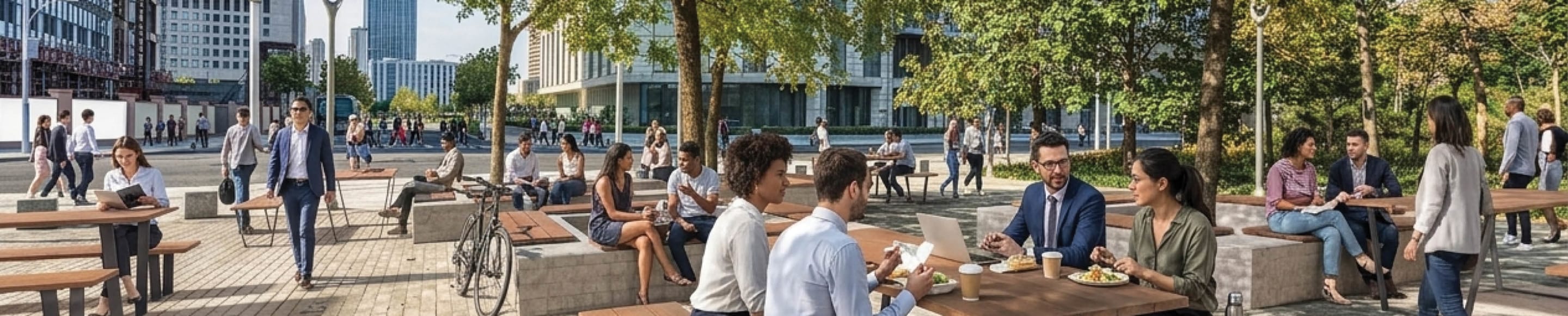
High-traffic public spaces play a vital role in how people move, rest, gather, eat, work and connect. From retail centers and university campuses to parks, civic spaces and mixed-use developments, these environments rely on public space furniture that can perform under constant daily use.
More than static elements in a landscape, public seating, commercial benches and outdoor commercial tables influence comfort, accessibility, circulation, dwell time and the overall quality of the public realm. For specifiers, the real question is not simply whether the furniture looks good, but whether it will keep performing after years of weather, wear and public use.
As a designer and manufacturer, botton+gardiner creates public space furniture that brings together design quality, structural performance, sustainable materials and human comfort.
Start with How the Space Will Be Used
Before selecting commercial seating or outdoor furniture, understand the role of the space. A park pathway may need a simple rest point, while a retail courtyard may need outdoor seating that encourages people to pause, dine and stay longer. A school or university campus may need robust seating areas for studying, waiting, supervision and high-volume movement.
Consider:
Who will use the space?
How long are people likely to stay?
Will the furniture support resting, waiting, dining, working or socializing?
Where does foot traffic naturally build up?
Will wheelchair users, strollers, carts or mobility aids need clear access?
Good street furniture should support the way people already use a space, not interrupt it. The strongest furniture plans begin with behavior, not product selection.
Specify Commercial-Grade Strength from the Start
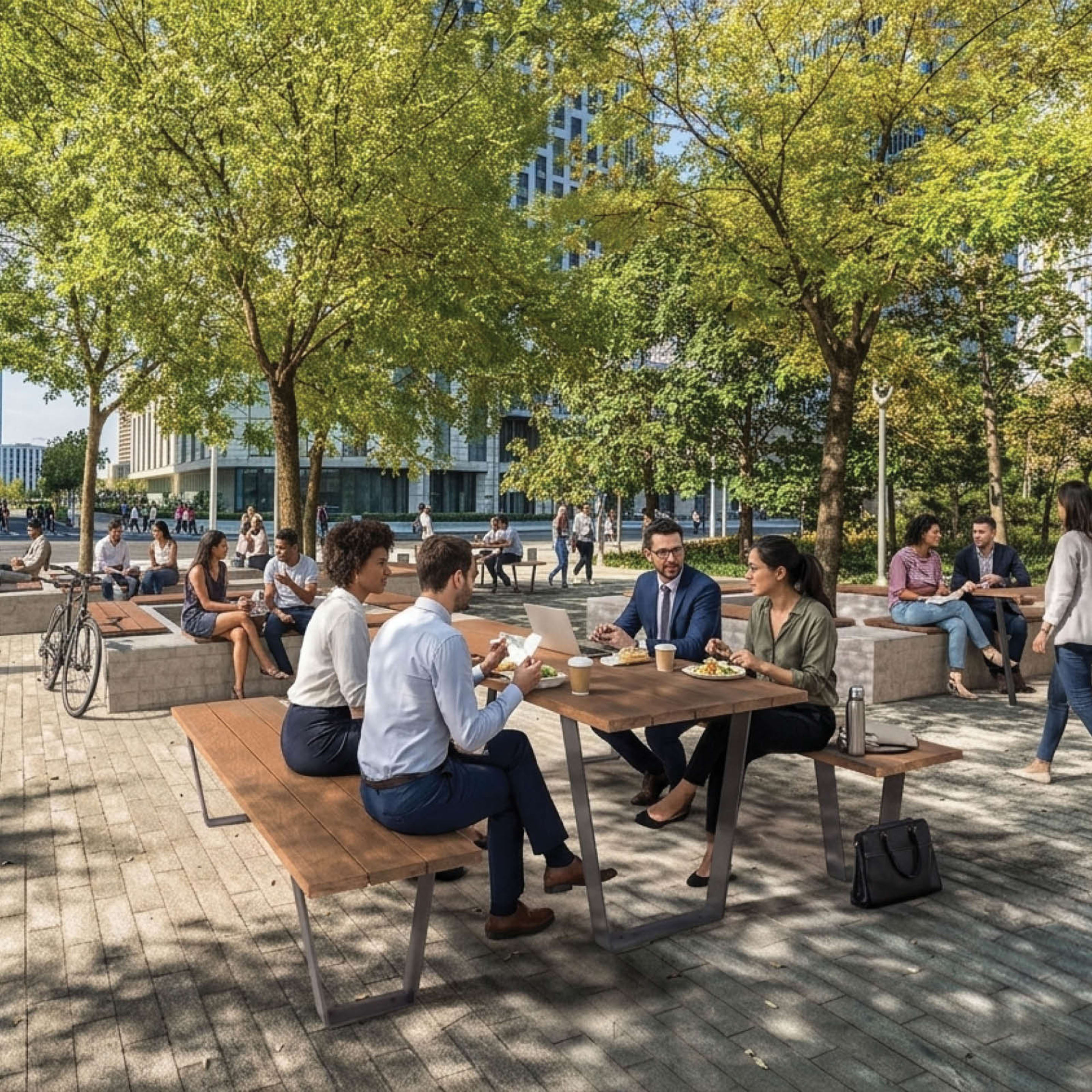
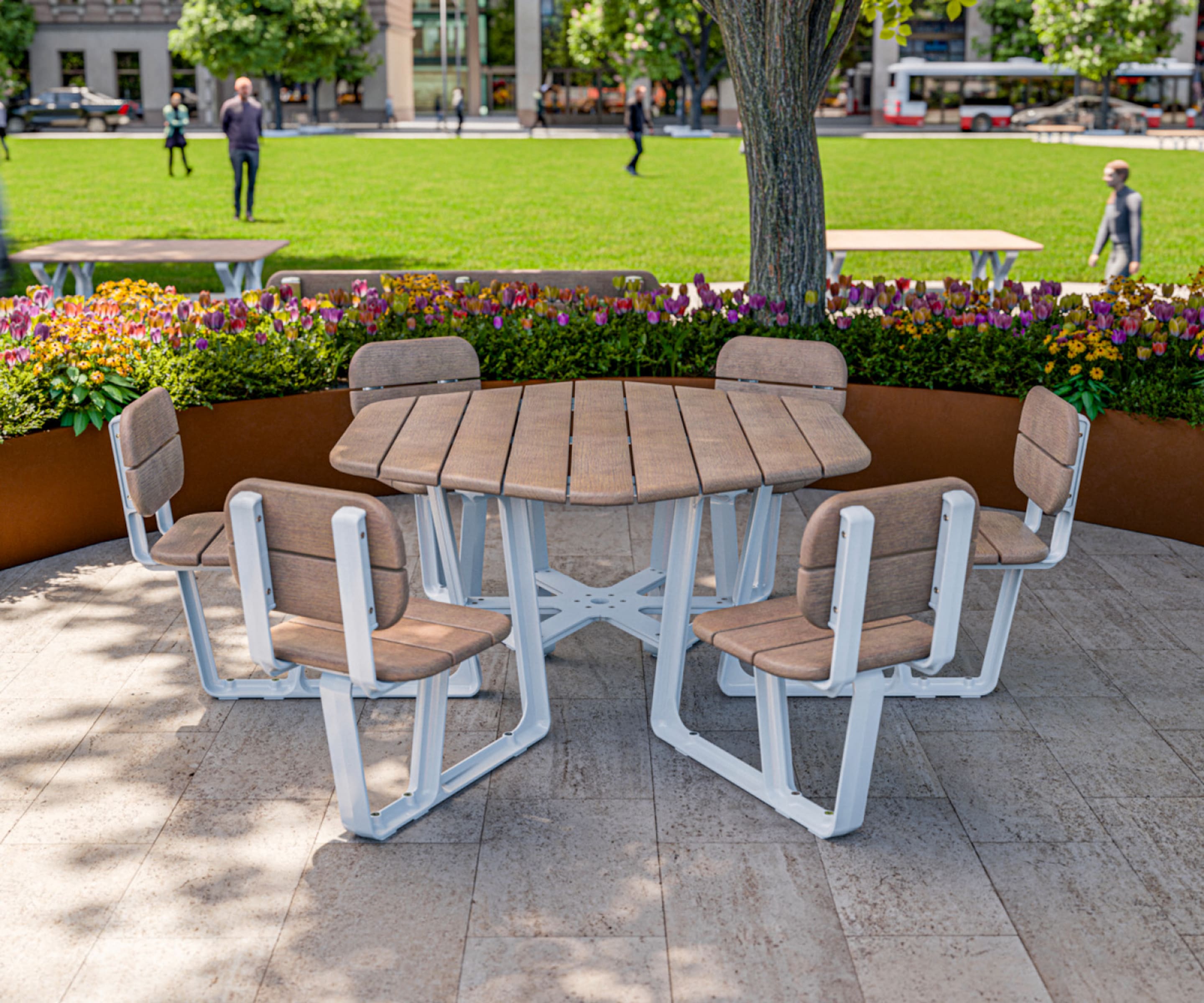
Public spaces place unique demands on furniture. Constant use, exposure to the elements, regular maintenance and occasional misuse all influence long-term performance. In high-traffic environments, durability depends on more than choosing a material that simply looks robust.
Key engineering details include:
Frame strength and load-bearing performance
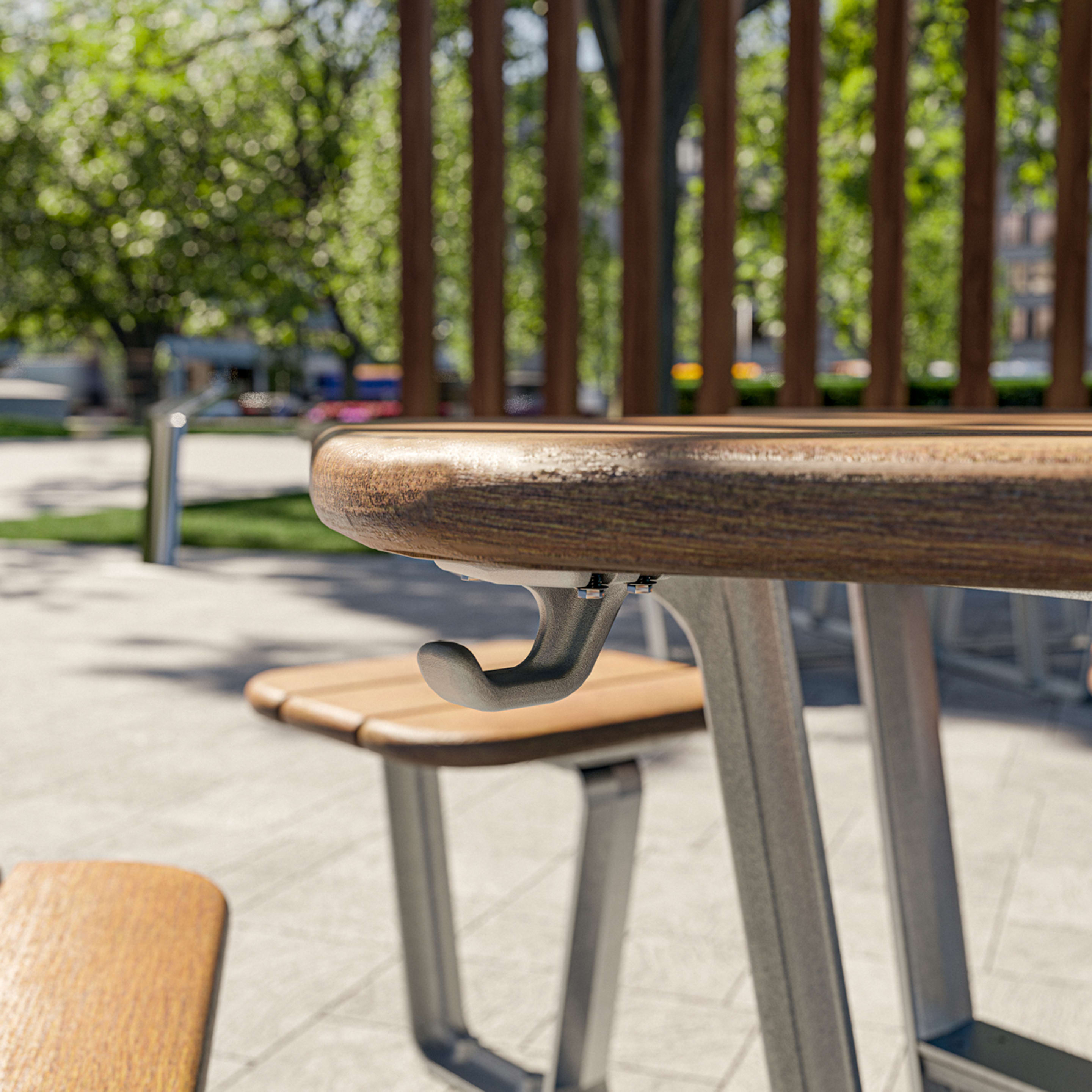
Secure fixings, weld quality and appropriate anchoring
Stable bases and robust joints
Tamper-resistant details
Smooth edges and reduced snag points
Drainage-friendly design
These details may not stand out in a product image, but they strongly affect safety, stability and long-term performance. They are also the result of considered engineering. With in-house design and engineering capability, botton+gardiner develops products where structural performance, practical detailing and material longevity are integral to the design - not separate considerations.
Choose Materials That Suit Local Conditions
Material choice should respond to the site, not just the desired look. Public spaces are often exposed to strong UV, heat, rain, humidity, coastal air, dust, spills, daily surface wear and frequent cleaning routines.
Responsibly sourced hardwoods: Bring warmth, natural character and tactility to public seating, commercial benches and outdoor furniture settings.
Duraslat smart alternative: Offers a practical, sustainable option for projects that need durability, consistency and reduced maintenance demands.
Locally sourced steel and aluminum: Steel supports strength and structural reliability, while aluminum offers lightweight durability and corrosion resistance. Both can help maximize recycled content and recyclability.
Powder-coated finishes: Support color consistency, surface protection and a refined finish across commercial outdoor furniture projects.
For public realm projects, material selection is most successful when durability, maintenance, sustainability and design intent are considered together from the start.

Treat Comfort as a Performance Requirement
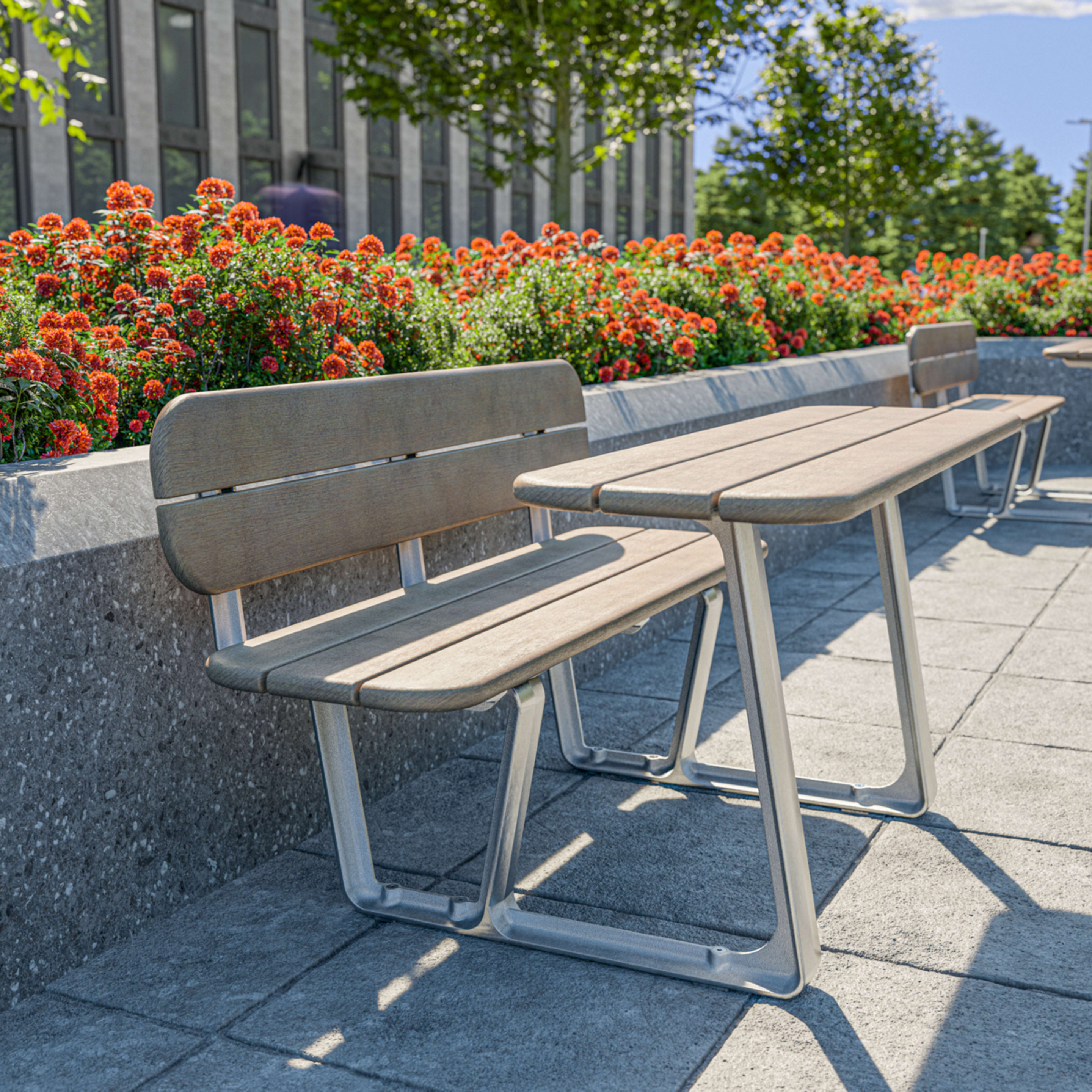
A seat can be structurally strong and still fail the space if people do not want to use it. Comfort affects dwell time, accessibility, social interaction and the way people experience a public environment.
When specifying seating and tables, consider:
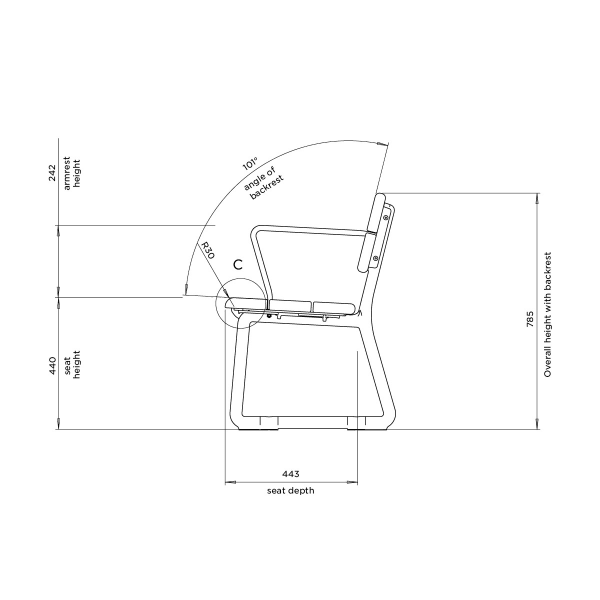
Seat height, depth and angle
Backrests and armrests
Edge comfort
Table height and knee clearance
Shade access and thermal comfort
These details are especially important for older adults, wheelchair users, people using mobility aids, families with strollers and anyone who benefits from extra support when sitting or standing. A considered seating strategy provides choice, supporting a wider range of users and activities while improving the overall functionality of the space.
Build Accessibility into the Layout
Accessibility is not only about the furniture item itself. It is also about placement, spacing, approach and circulation. ADA requirements and accessibility guidelines can help inform inclusive design thinking, but the practical outcome depends on how well the furniture works within the broader public realm.
Consider:
Clear circulation paths
Wheelchair access and transfer space
Pram-friendly movement
Suitable approach space around tables
Seating near entries, pathways, playgrounds, food zones and waiting areas
Options with backs, armrests and open companion spaces
An accessible layout avoids clutter, blocked paths and isolated seating. It creates public spaces that feel easier, safer and more welcoming for everyone.

Plan for Maintenance Before Installation
In high traffic environments, maintenance is part of the specification. A lower upfront cost can quickly become more expensive if furniture requires frequent repair, replacement, deep cleaning or finish restoration.
Consider:
Cleaning access
Replaceable components
Accessible fixings
Scratch visibility and graffiti resistance
Water pooling and dirt traps
Spare parts and long-term supplier support
For municipalities, facility managers and retail property managers, lifecycle value is often more important than purchase price alone. Specifying for maintenance from day one helps minimize whole-of-life costs while preserving the quality and performance of the public realm.
Where Design Appeal and Long-Term Performance Meet
High-traffic furniture should contribute to the identity of a place while still performing under real daily use. It should complement the landscape design, built form, planting, wayfinding, precinct character and broader public realm experience.
At botton+gardiner, we believe public furniture should be both beautiful and hard-working. Our collections combine Australian design, commercial-grade detailing, durable materials and responsible sourcing to support public spaces that need to look considered and perform over the long term.
Create Public Spaces That Work Every Day
Great public spaces are measured by how they perform over time. Thoughtfully specified public seating, commercial benches and outdoor tables should continue to support everyday use, withstand demanding environments and contribute to places people want to return to.
By considering structural integrity, material performance, ergonomics, accessibility, maintenance and layout from the start, specifiers can create public spaces that are more durable, more welcoming and easier to manage over time.
If you are planning furniture for a high-traffic public space, botton+gardiner’s commercial furniture solutions provide a practical starting point - bringing together robust engineering, durable materials and considered design to support long-term performance.