How a public space is designed – from the layout to the furniture, form and finish – dictates how people move, feel, and connect within a space. Every choice affects performance, costs and longevity and should be carefully considered when designing a public space. From circularity becoming the standard to seamless tech integration in urban spaces, the trends of public space furniture design are evolving. As leading commercial furniture suppliers in North America, we have observed that sustainability and inclusivity continue to drive the design of public spaces. Drawing on over 30 years of experience in creating public environments across Australia and North America that connect people and are built to last, we will explore the top public space furniture trends to watch in 2026 and how to effectively select furniture for plazas, educational and corporate campuses, parks and municipalities.
2026 Trend Map: A Quick Snapshot
Circularity as Standard- Choosing sustainable or circularity-focused materials, such as recycled plastics and aluminum, reduces lifecycle costs.
Human-Centric Comfort & Wellness Outdoors- Creating comfortable spaces with low-VOC finishes and enhanced biophilic elements enhance and protects human wellbeing.
Modular Flexibility & Reconfigurability in the Public Realm- Adaptive layouts such as modular seating add multi-use value and longevity to a space.
Seamless Tech Integration in Urban Amenities- Integrating power, data and digital wayfinding into spaces for seamless use.
Aesthetic Duality: Quiet Luxury + Playful Expression- Balancing timeless, minimalism with local vibrancy.
Inclusive & Accessible by Default- Ensuring spaces are accessible for all creates more engaging and inclusive public spaces.


Trend 1: Sustainability & Circularity as Baseline
Key requirements:
Councils and developers are evaluating proposals not only for functionality or aesthetics but also for the sustainability and lifecycle of the designs. Choosing sustainable materials is no longer an optional trend but is moving towards a mandatory requirement.
Proposals are being evaluated on:
Materials Composition
Volatile Organic Compounds (VOC) levels
UV Stability
Biophilic Elements
Disassembly Design
Across the U.S., designers and specifiers commonly turn to trusted sustainability benchmarks like LEED, BIFMA LEVEL and GREENGUARD to guide product selection for public and commercial spaces. These programs aren’t mandatory, but they’re widely used to validate durability, indoor-air quality and responsible material choices.
Additionally, public space furniture that cannot be easily recycled, repaired or refurbished becomes costly to maintain and environmentally inadequate. Designing with these standards and considerations in mind ensures that public space furniture is sustainable from creation through to disassembly.
Spec Guidance:
Request recycled content percentages, VOC declarations, and durability testing data from manufacturers.
Specify spare parts availability, maintenance support and take-back programs to check life-cycle costs.
Confirm UV stability, hardware resistance and powder coat finishes for outdoor spaces.
botton+gardiner offer a wide selection of commercial bins, planters, park seat benches and tables with low-VOC finishes and powder coat systems paired with stainless steel and replaceable components for lifecycle value. Each product has been designed to meticulously blend into environments, using materials that meet American standards for longevity, safety and durability.
Trend 2: Human-Centric: Comfort, Wellness & Biophilia Outdoors
What’s New:
Public space furniture is about more than simply creating places to sit– It’s about creating environments that enhance wellbeing, comfort and community. Ergonomic furniture, biophilic elements and inclusive designs in public spaces help to accomplish this.
Here is how designers can enhance environments:
Ergonomic Variety: Perch seats and curved benches paired with different height options to support different activities– working, resting or interacting.
Restorative Areas: Create shaded zones, lounge or seating clusters paired with curved edges to encourage people to rest or connect.
Biophilic Elements: Adding in biophilic elements such as planters and natural textures softens urban spaces and enhances wellbeing.
Inclusive Comfort: Use public furniture that accommodates different mobility levels and body types to ensure public spaces are inclusive.
Spec Guidance:
Prioritize comfortable seat depths and arm heights for varied postures and abilities.
Integrate planters as spatial dividers that seamlessly integrate greenery and flow.
Prioritize shaded seating and heat-resistant materials in high-exposure sites.
Use low-maintenance and low-VOC finishes suited for long-term use.
botton+gardiner’s planters, park bench seats, and tables are designed to create restorative outdoor areas for commercial courtyards and campuses that invite collaboration, rest and play. With wellness and comfort at the forefront, collections such as Avenue and Terrain combine ergonomics with durable materials designed to withstand all climates and outdoor environments.


Trend 3: Modular Flexibility & Reconfigurability
What’s New:
Creating modular seating not only allows spaces to be reconfigured quickly but also extends product use and lifespans. In multi-use spaces such as campuses, plazas and event spaces, having modular furniture helps to shift the environment quickly– from quiet study zones to collaborative spaces. When furniture can be rearranged, replaced or expanded, life cycle costs and waste are reduced.
Types of Adaptable Furniture:
Modular Seating: Use modular seating that can be rearranged for solo use or collaboratively.
Stackable Chairs: Provide flexible seating for university, event spaces and community venues.
Moveable Furniture: This includes tables, benches or planters that can be repositioned as needed, ideal for re-zoning plazas or events.
Spec Guidance:
Look for tool-less reconfiguration and replaceable components.
Check that aesthetics are maintained when furniture is expanded or transformed.
Validate load ratings and robustness for public use.
botton+gardiner’s modular furniture encourages flow and collaboration. Depending on the purpose and use, they can be configured or expanded to meet the activity at hand. From campus courtyards to plaza furniture, the Sorrento collection provides modular solutions that evolve with community needs.
Trend 4: Seamless Tech Integration
Technology is now a key component of how people connect, work and spend time in public spaces. With more people studying and working remotely, outdoor environments are increasingly expected to support digital access, device charging and hybrid work environments. From powering devices to smart lockers, seamlessly integrating technology is no longer an afterthought. To create spaces that are accessible and designed for multiple purposes, designers and architects should select public space furniture that seamlessly integrates with technology.
How to Integrate Tech Into Furniture:
Power and Charging Access: Choosing furniture with built-in USBs and wireless charging stations help people stay connected in parks, transit areas, university lobbies and plazas.
Sustainable Energy Solutions: Selecting public furniture that integrates solar power benches or lighting helps reduce reliance on grid energy and makes public spaces self-sufficient.
Smart Storage and Digital Wayfinding: Integrating lockers and digital signage improves usability and visibility in high-traffic areas.
Spec Guidance:
Confirm electrical compliance standards in North America and ensure the IP ratings for outdoor installations are compatible.
Ensure vandal resistance and easy maintenance access when installing in high-traffic areas.


Trend 5: Aesthetic Duality: Quiet Luxury + Playful Expression
Quiet luxury and playful expression are two parallel trends we are seeing emerge. This is embraced through neutral palettes, refined materials and soft organic forms. Playful expression, on the other hand, is using bold color and texture to bring public spaces to life. Both trends focus on how materials, form and finish can shape how people feel and connect in a space.
Design Types:
Quiet Luxury: Uses timeless materials, soft curves and tactile surfaces to bring this style to life, such as tactile timbers and powder-coated metals. Often found in university lobbies, plazas and shopping centers.
Playful Expression: Combines color, pattern and contrast to promote energy, creativity and collaboration. Furniture is typically sculptural or modular to invite interaction or curiosity. Commonly used in youth spaces, campuses or retail environments.
Spec Guidance:
Ensure finishes and materials balance durability and tactile comfort.
Apply cohesive palettes across bins, benches, bike racks, and planters for consistent placemaking.
Choose materials and coatings that maintain appearance in high-exposure and high-traffic areas.
The organic forms found in botton+gardiner’s Connect collection captures playful expression with inviting forms, powder-coated finishes and flexible configurations that encourage collaboration and boost energy in a space.
Trend 6: Inclusive & Accessible by Default
The foundation of good design is accessibility and inclusivity– without this, spaces become limited. Spaces that embrace human diversity are those that are built for longevity. Being truly inclusive goes beyond minimal compliance measures but creates spaces that are welcoming and dignified for all users.
What's Driving the Shift:
Universal Design Compliance- ADA compliance requires public space furniture to be accessible and inclusive.
Changing Demographics: With growing communities and aging populations, it is expected that public furniture and spaces are tailored to all ages and capabilities.
Equity Through Design: How accessible a public space is communicates a sense of belonging. Incorporating thoughtful, dynamic seating, clear pathways, and accessible signage helps build inclusive communities.
Spec Guidance:
Refer to ADA compliance when selecting and positioning furniture to allow clear access around key amenities and seating to ensure wheelchair access.
Ensure inclusive signage and edge visibility are built into spaces.
Choose finishes that are comfortable to touch and non-glare when exposed to extreme temperatures.
Accessibility is thoughtfully integrated into botton+gardiner collections to support inclusive public spaces. Collections such as Urban and Contour show that accessible features can encourage inclusivity without compromising on design integrity.


Outdoor/Public-Realm Considerations for North America
In North America, the diverse climate and compliance requirements demand that materials and finishes can withstand intense UV exposure, heat, snow and hail. Public furniture must also be equipped with anti-vandal mechanisms and built for high use.
How to Select Compliant Public Furniture:
Climate Hardening: Ensure materials and finishes have UV-stable coatings, 316-grade or marine-grade stainless steel in coastal areas and powder coat systems approved for exterior use.
Anti-Vandal Strategies: Use anti-graffiti coatings, tamper-resistant fixings and opt for replaceable panels to simplify maintenance.
Safety and Security: Ensure layouts align with CPTED principles for visibility and accessibility.
Operational Value: Look at life cycle costs, warranty and maintenance intervals required to ensure long-term performance in high-use areas.
Procurement Toolkit: How to Specify with Confidence
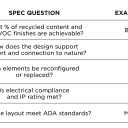
Use this checklist opposite to assess products during design development or tender review:



Planning for 2026?
Ready to create spaces that connect people, reflect American values and design? Explore our collections or get in touch with a commercial furniture supplier at botton+gardiner today.
FAQs
How do I balance sustainability and vandal resistance?
Choose sustainable materials and separate replaceable panels that can be replaced.
What powder-coat specs perform best near the coast?
Polyester powder with UV-stable top coats works best; they can also be combined with 316 SS for marine environments.
What’s a simple way to evidence accessibility in a lobby layout?
Adding an ADA compliance accessibility reference drawing, which showcases seating heights, transfer clearances, and contrast ratios, is the easiest way to incorporate accessibility into a lobby layout.